Orbit Base
The command centre for the whole crew.
Orbit Base is where the manager runs the operation — every worker, site, shift, incident and dollar in one place. It's the other half of the Orbit system: the crew carries Orbit Team, the manager carries Base, and they share one live brain.
- role
- design · engineering
- timeline
- 2025
- platform
- iOS · Android · cloud
- scope
- the manager app
Running a crew,
screen by screen.
From the morning briefing to the month's payroll. Keep scrolling — this is the app a manager running five sites actually lives in.
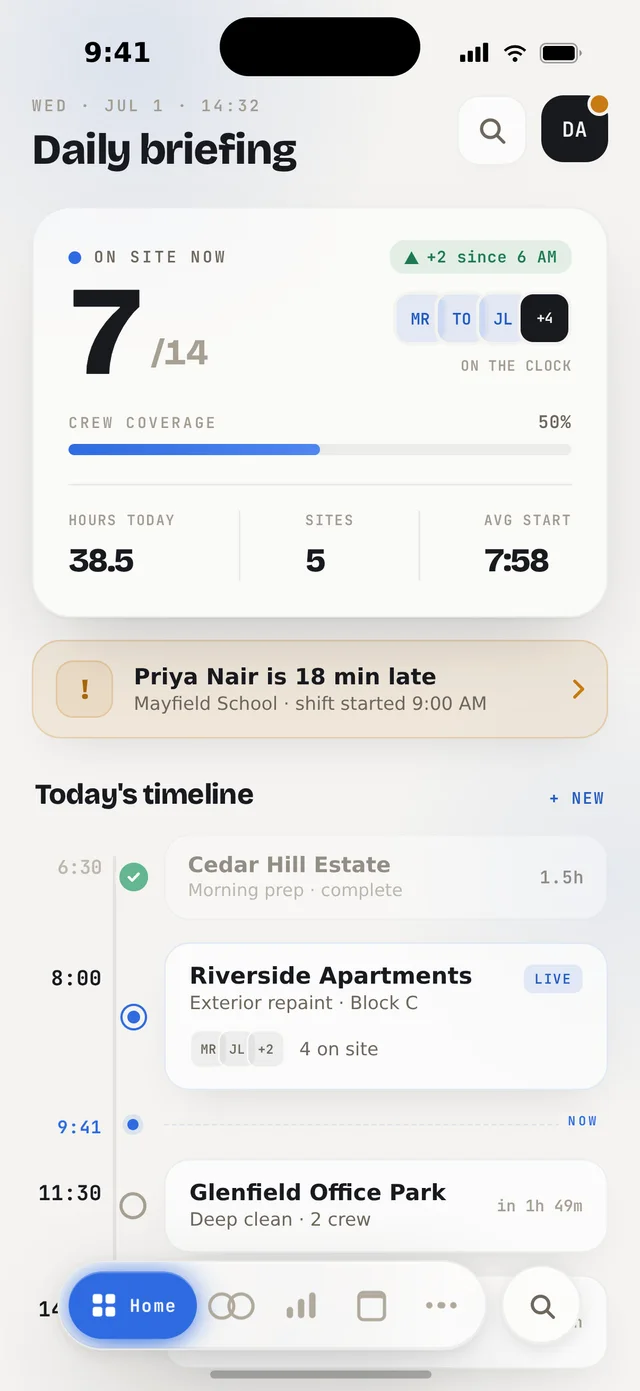
The whole operation, one screen.
Base opens on a daily briefing — who's on site, coverage, hours, and the one thing that needs attention now. Built so a manager running five sites never has to go hunting.
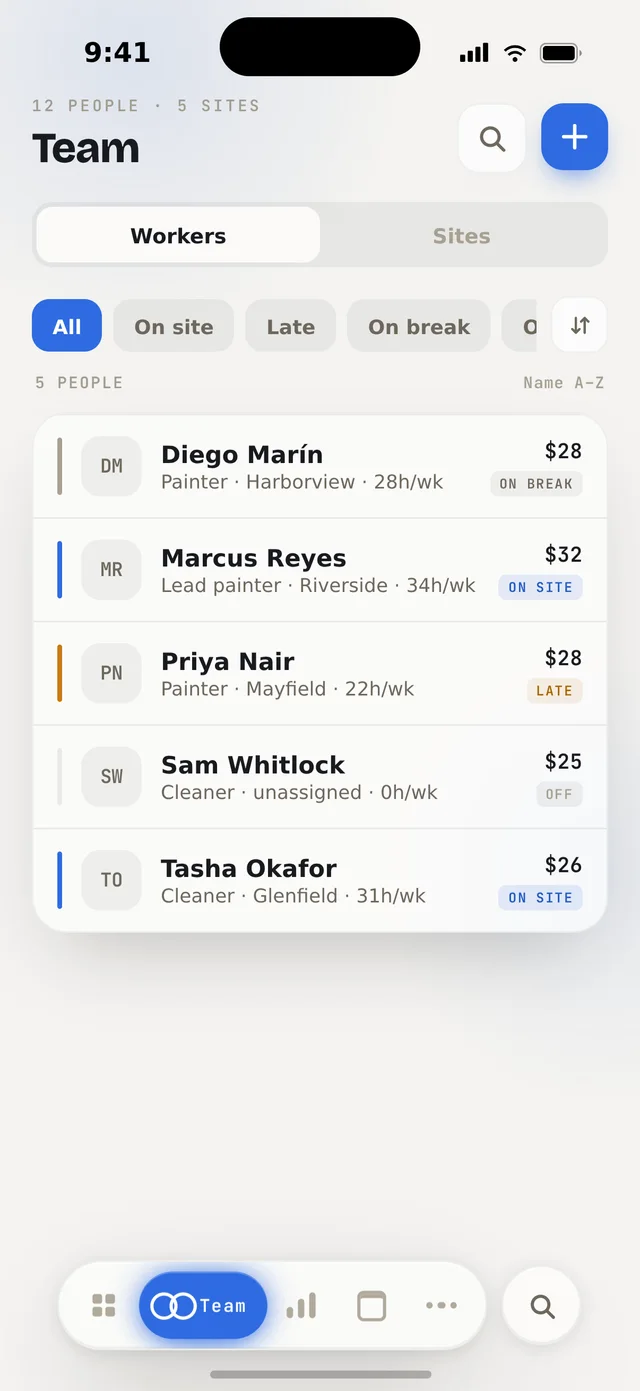
Every person, where they stand.
The whole roster — on site, late, on break, off — with hours and pay rates at a glance, filterable in a tap. You always know exactly who's working and who's not.
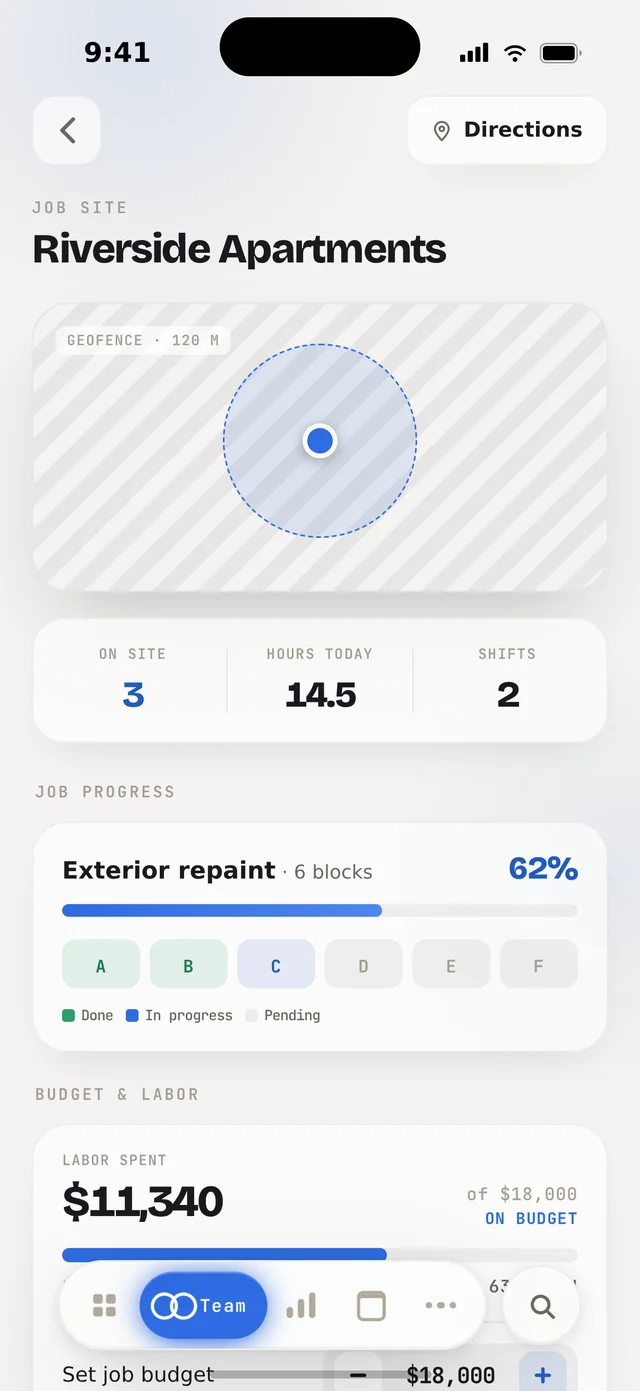
A job that reports on itself.
Per-site geofence, live headcount, progress by block, and labour spent against budget — "$11,340 of $18,000, on budget." The financial truth of a job, in real time.
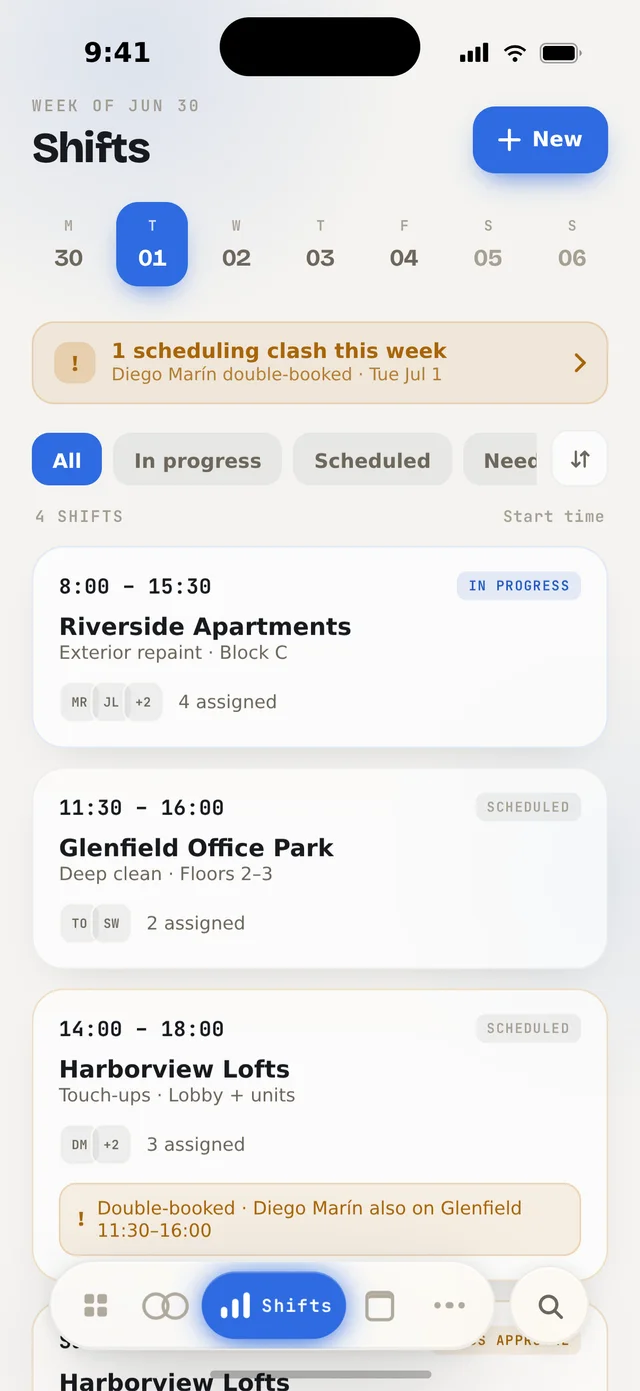
Scheduling that catches its own mistakes.
Assign, filter and re-order shifts — and the instant two jobs claim the same person, Base flags the double-booking before it becomes an 8am no-show.
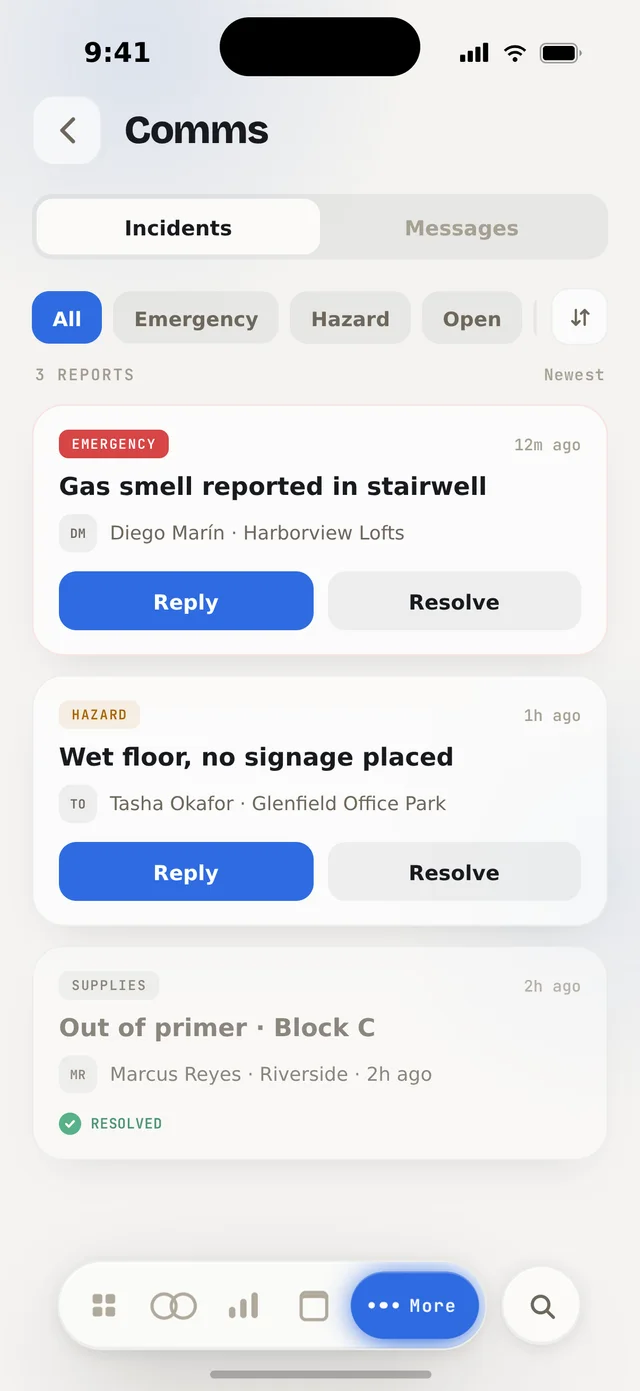
Every report, triaged the second it lands.
Emergency, hazard, supplies — colour-coded and sorted by urgency the moment the crew sends it. Reply or resolve right from the list; nothing waits in a group chat no one's watching.
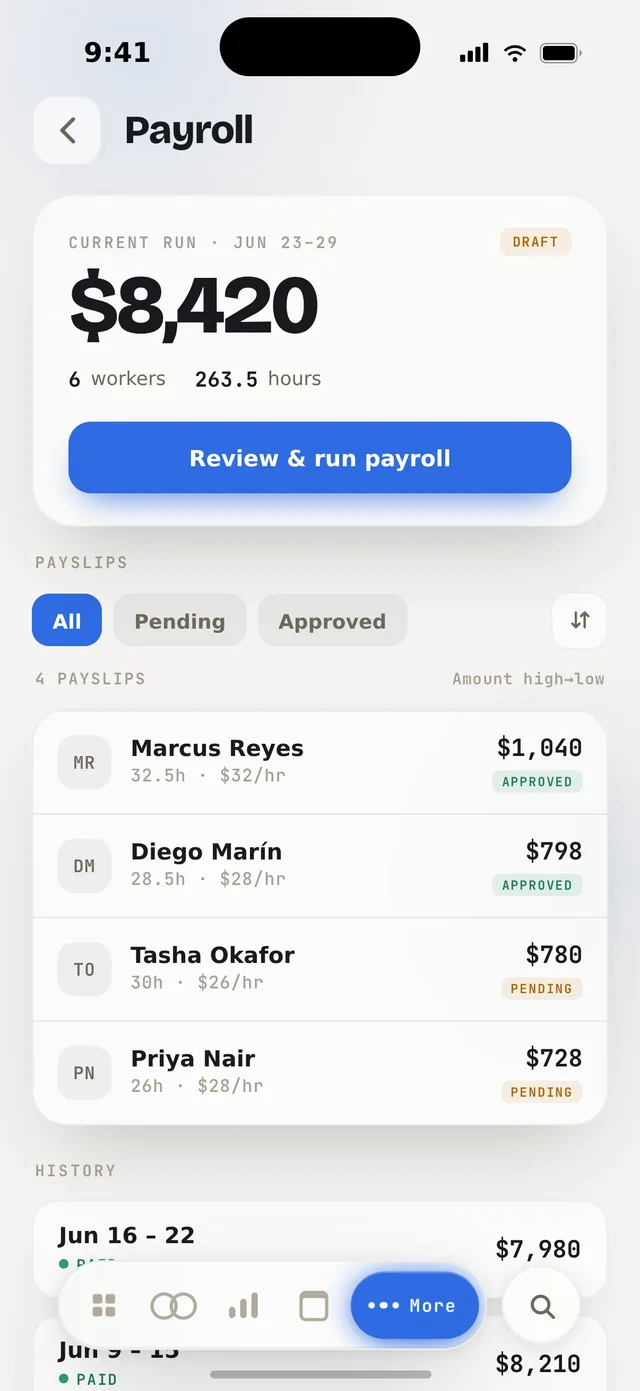
Payday without the spreadsheet.
Every payslip built straight from real clock-ins — hours, rate, total — reviewed and run from one screen. $8,420 across six workers, approved in a tap, not an afternoon.
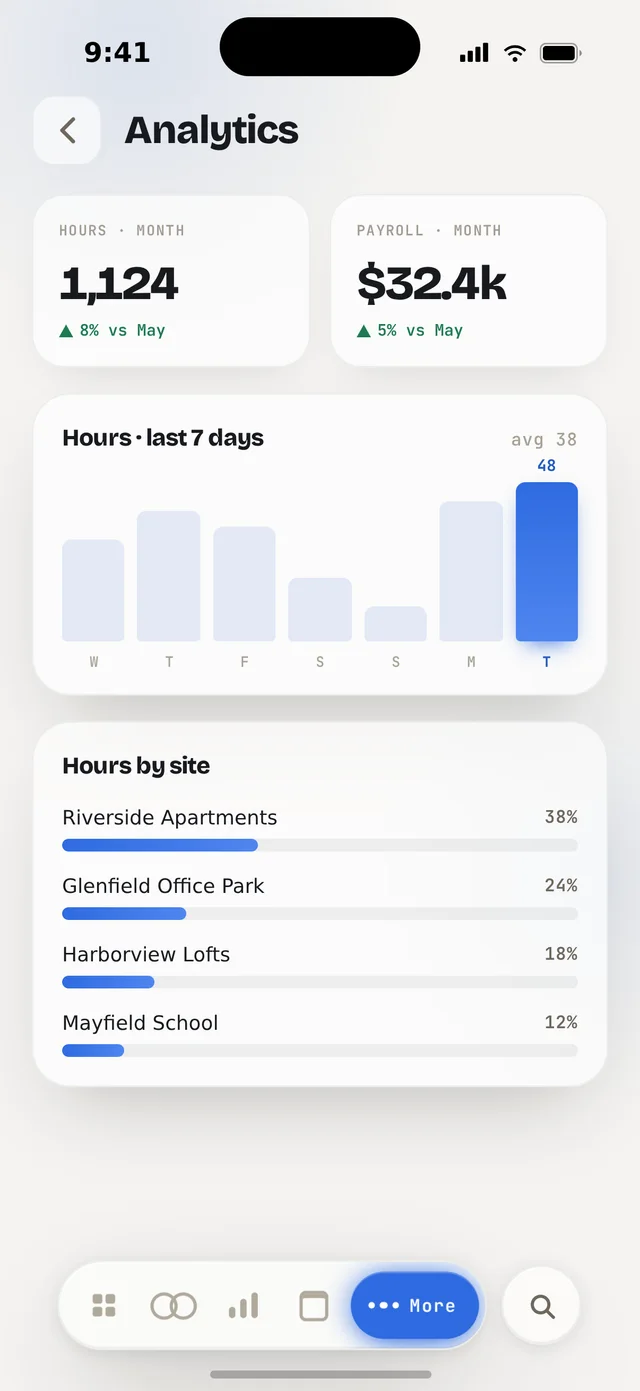
The numbers, without the export.
Hours and payroll trending against last month, a week at a glance, spend broken down by site. The report a manager used to build by hand — already built.
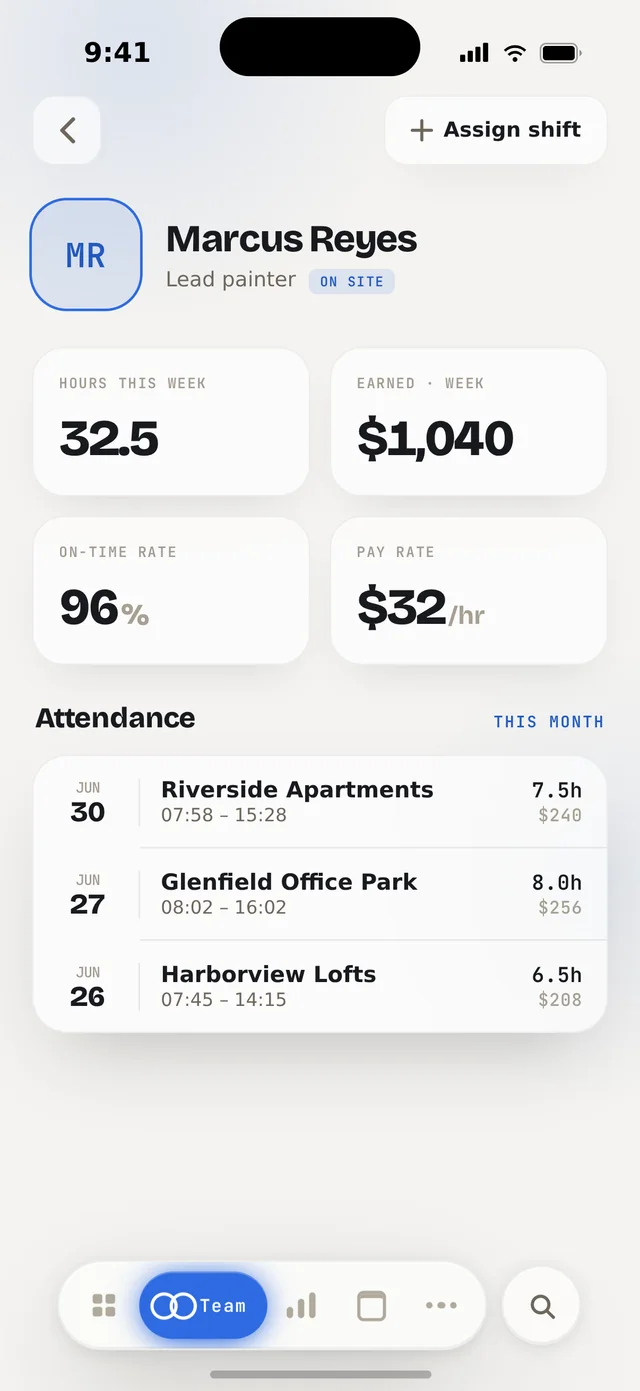
One tap from roster to record.
Hours, earnings, on-time rate and a full attendance history for every person on the crew — the whole employment picture, not just today's status.
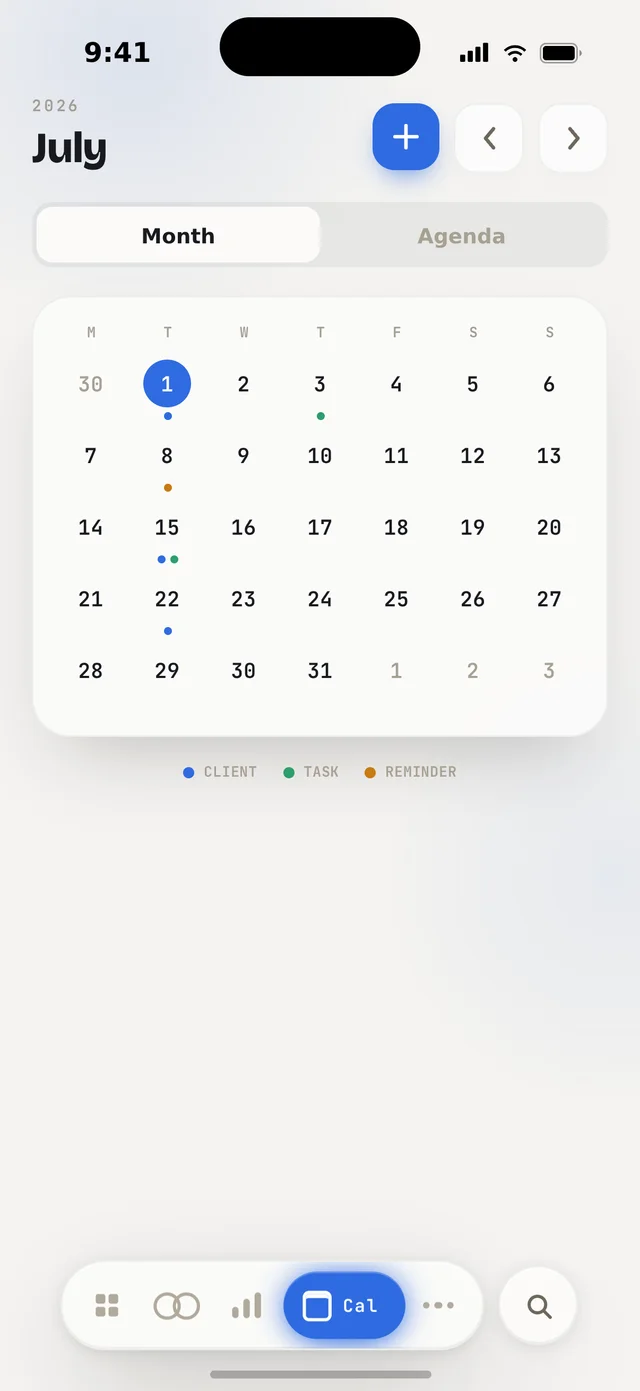
Every commitment, one view.
Client visits, tasks and reminders layered onto a single month — so nothing about running five sites lives only in someone's head.
Don't take my word — run the ops app.
This is the real, working Orbit Base app running right here. Tap in and run a crew — read the briefing, open a site, assign a shift, resolve an incident. Everything's live.
The one place I let AI in.
That morning briefing you just read? One part of it is written by a language model — and only that part. Here's the whole of it, end to end. No mystery, because I built it to be explainable.
01 Aggregate
Before dawn, a scheduled job runs plain SQL — today's shift count, outdoor jobs at weather risk, workers flagged high-risk, open reports, pending hour requests. Numbers, already computed.
02 Summarise
Those figures become a tiny JSON payload — five or six numbers, nothing more. No names, no raw records, no history. Just the day's shape.
03 Narrate
That payload goes to Claude Haiku 4.5, which turns it into three to five plain-English sentences. Writing the briefing is the model's entire job.
04 Deliver
The sentences land as the morning push notification. The manager wakes to a briefing they can read in five seconds — not a dashboard they have to decode.
Everything else that looks smart — the weather-risk flagging, the high-risk scoring, crew ranking, notification tiering — is plain SQL and heuristics, not an AI call. That's a deliberate line. It's cheaper, it's predictable, and it's honest in an App Store review: nothing here begins with "an AI decides who works." The model narrates numbers that were already true. It never touches a decision.
This is the kind of AI I wire into real products. Want to feel it work? Sketch your own project in the lab →
The spreadsheet, retired.
Most crews are run out of a spreadsheet, three group chats and a manager's memory. Base replaces all of it with a single command centre — real-time, geofenced, and honest about money. The manager spends the day managing, not reconciling.
01 Live command centre
Every site and worker, updating in real time.
02 Budget & labour
Labour spent vs budget, per job, as it happens.
03 Clash detection
Double-bookings caught at assign-time, not at dawn.
04 Payroll & analytics
Pay runs and the numbers, in the same pocket.